DineOS Redesign
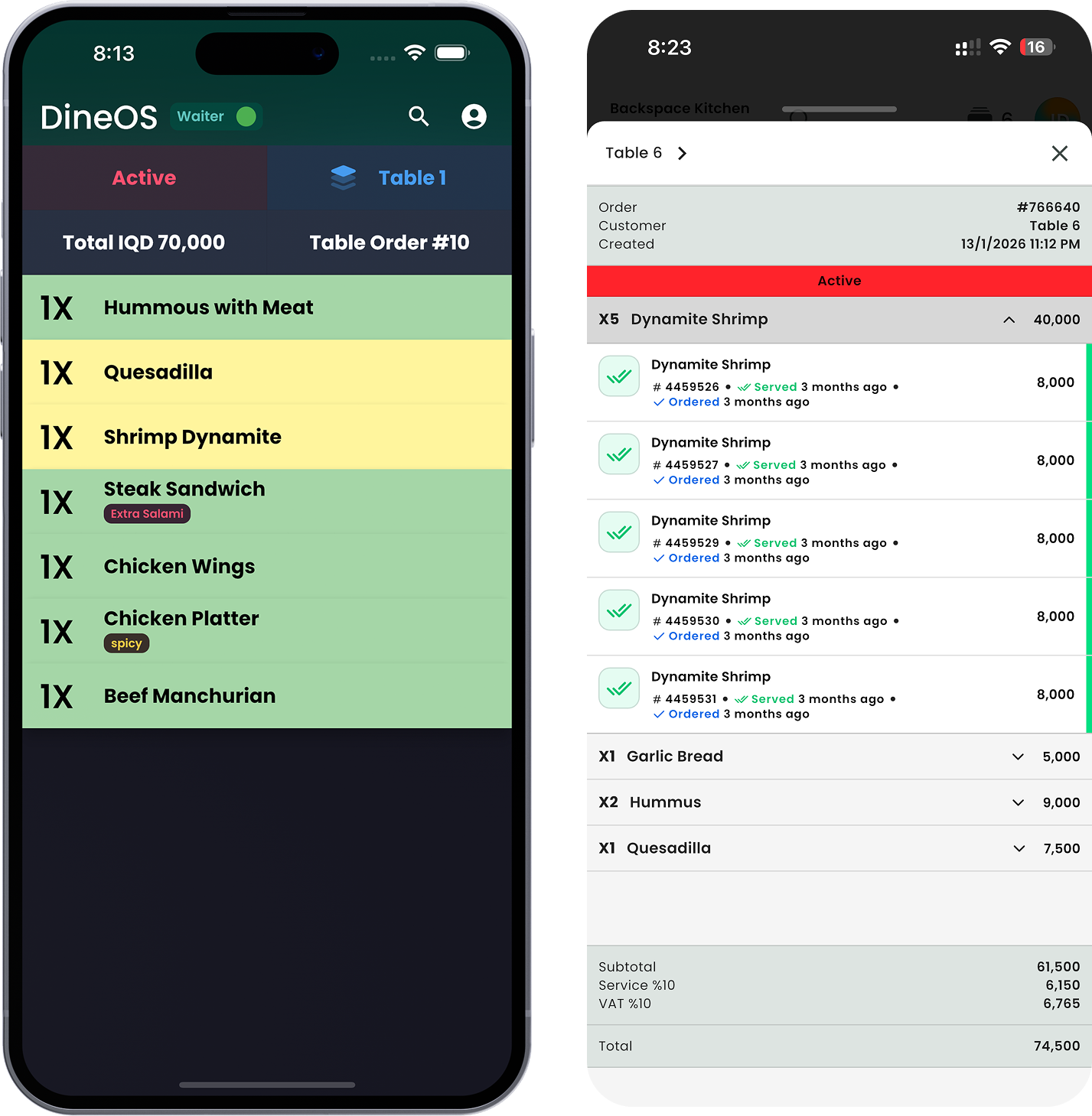
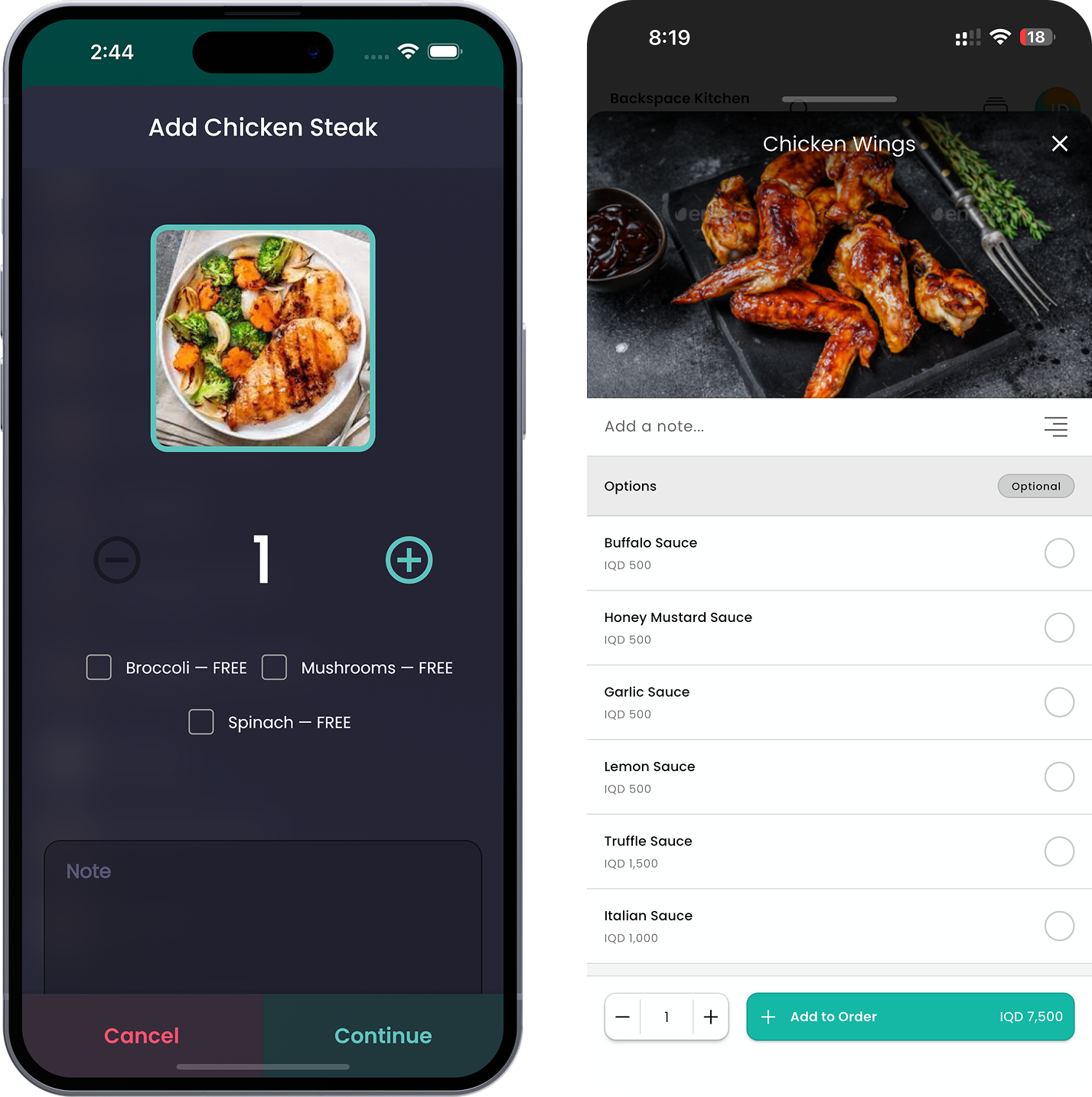
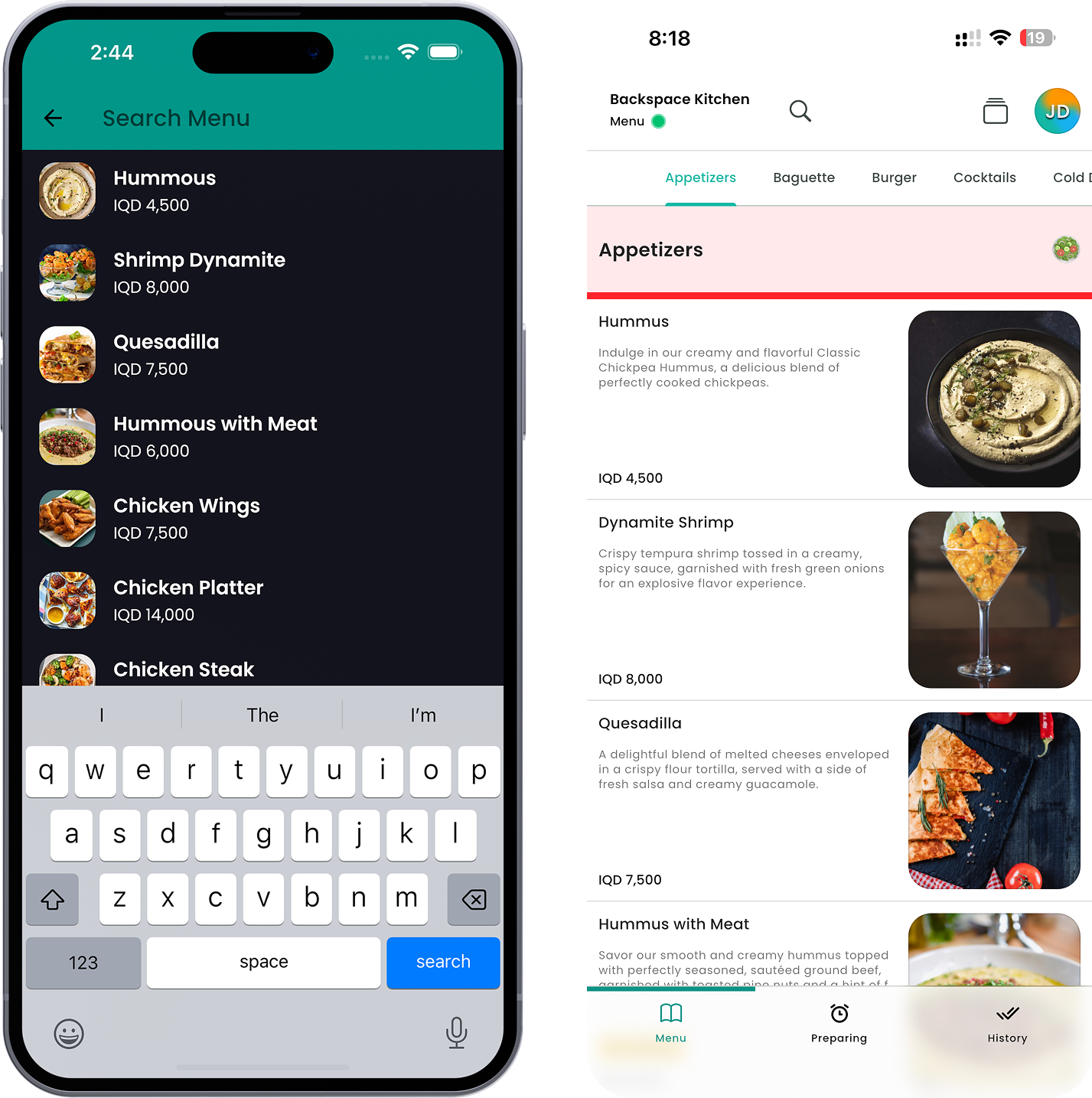
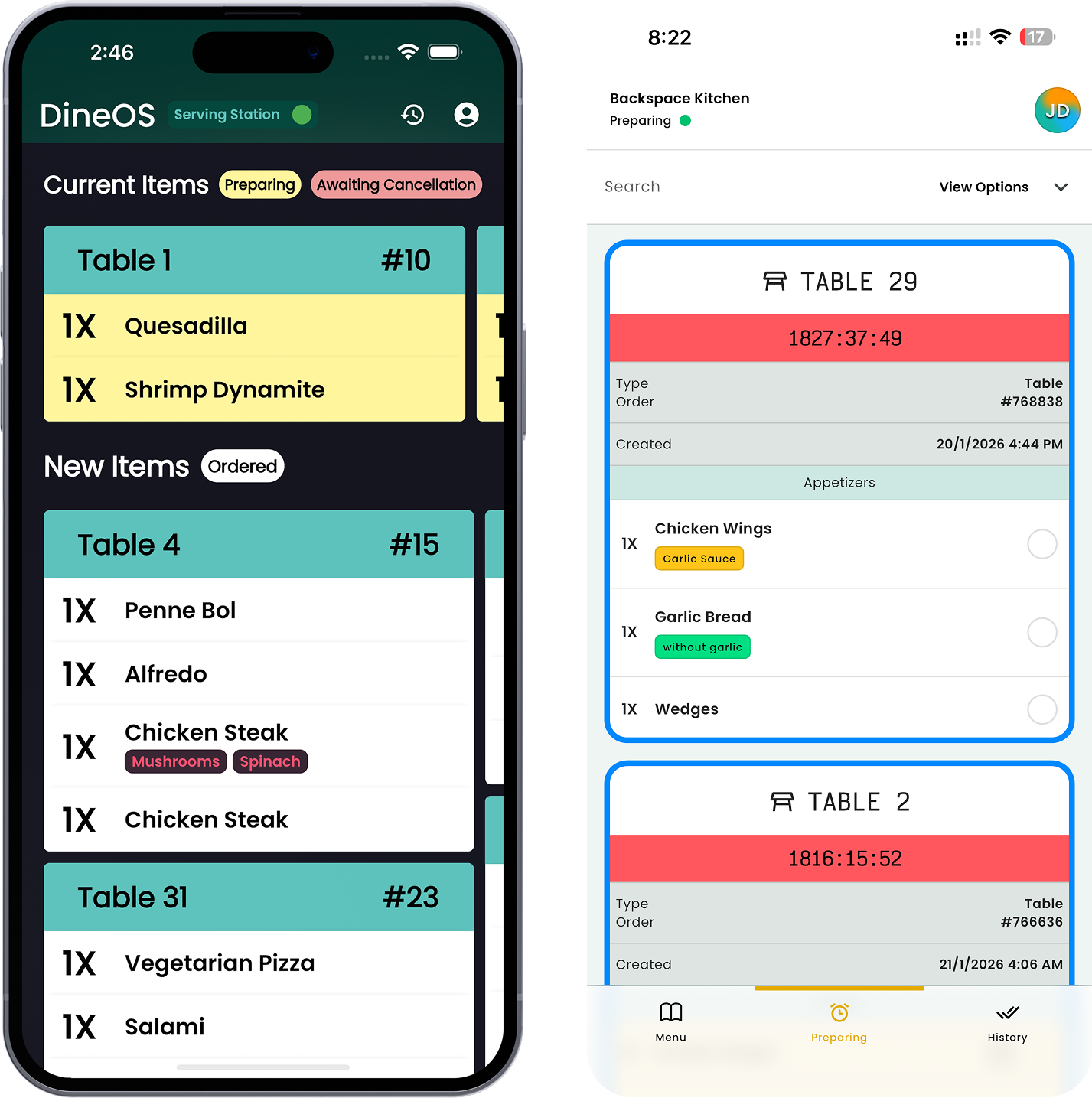
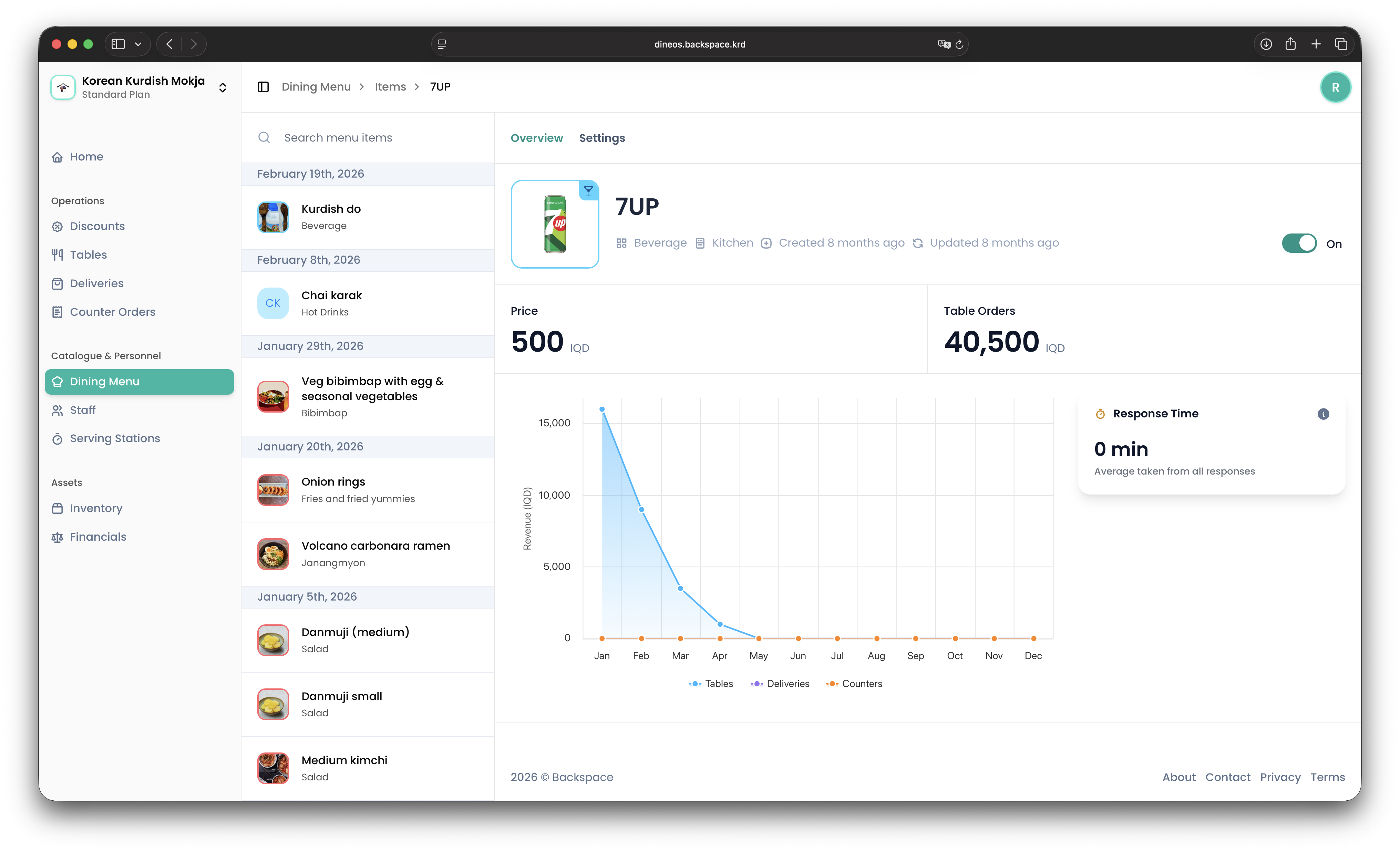
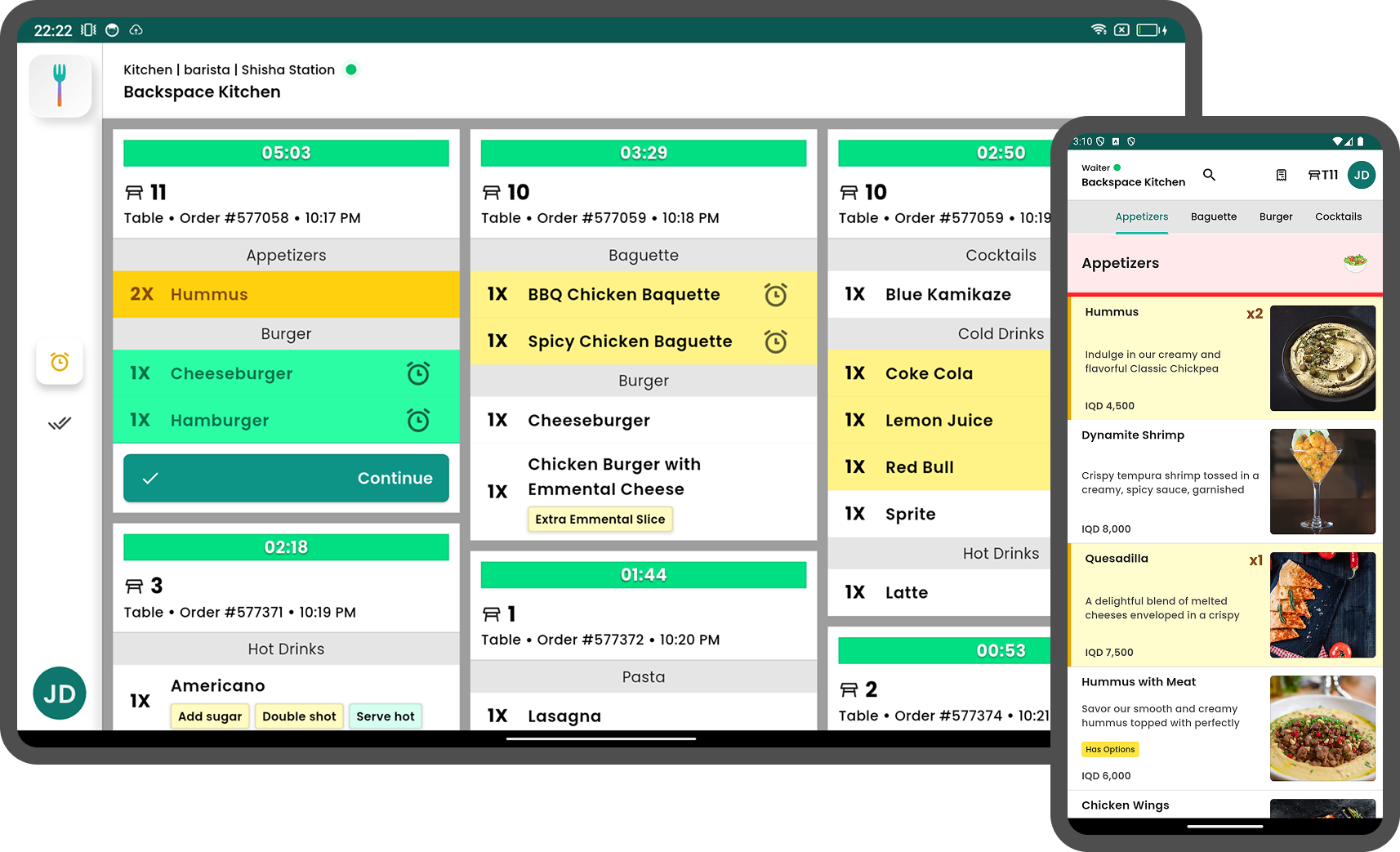
DineOS is a restaurant management system that supports the full dining workflow, from order taking through kitchen execution to payment processing. The product was redesigned to improve usability, simplify workflows, and reduce friction across waiters, kitchen staff, and cashiers.
Problem Statement
Restaurants often rely on fragmented, paper-based workflows to manage orders, leading to frequent mistakes such as incorrect items, missed customizations, delays, and a lack of clear order tracking. Communication between waiters, kitchen staff, and cashiers is heavily dependent on manual coordination, increasing the risk of misalignment in fast-paced environments. As operations scale, these inefficiencies make it difficult to maintain speed, accuracy, and visibility across the entire dining experience.
Insights
Eight insights drawn from staff interviews, on-site observation, and post-shift conversations shaped the redesign.
- Peak hours create a high-pressure environment where even small delays or mistakes quickly compound across the entire service.
- Order complexity increases with customizations, making accuracy harder to maintain without a structured input system.
- Kitchens prioritize orders based on clarity and timing, not just order sequence, requiring clear and consistent information.
- Waiters need to input orders quickly without breaking their interaction flow with customers.
- Cashiers depend on accurate order data to avoid billing issues and delays at checkout.
- Lack of real-time visibility makes it difficult for staff to know order status, leading to repeated follow-ups and interruptions.
- Miscommunication between front-of-house and kitchen is one of the primary sources of operational inefficiency.
- Consistency in how orders are recorded and displayed is key to maintaining speed and reducing cognitive load for staff.
The Process
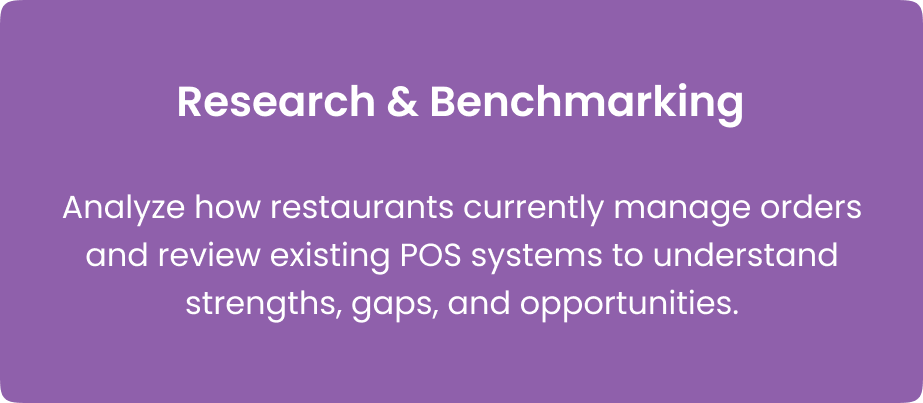
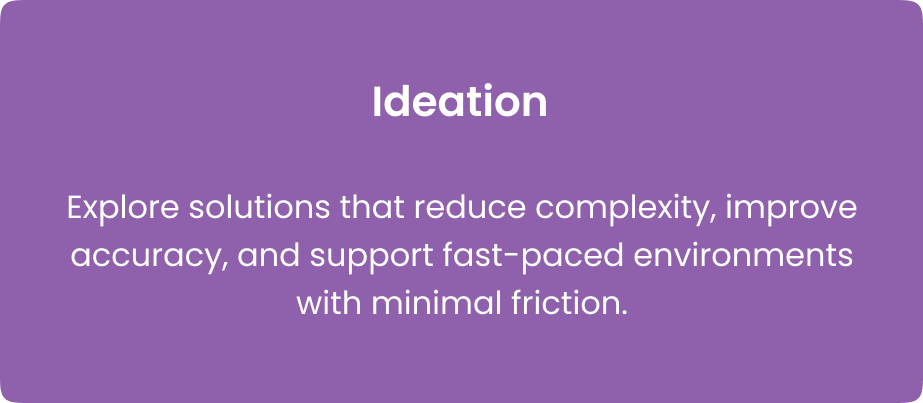
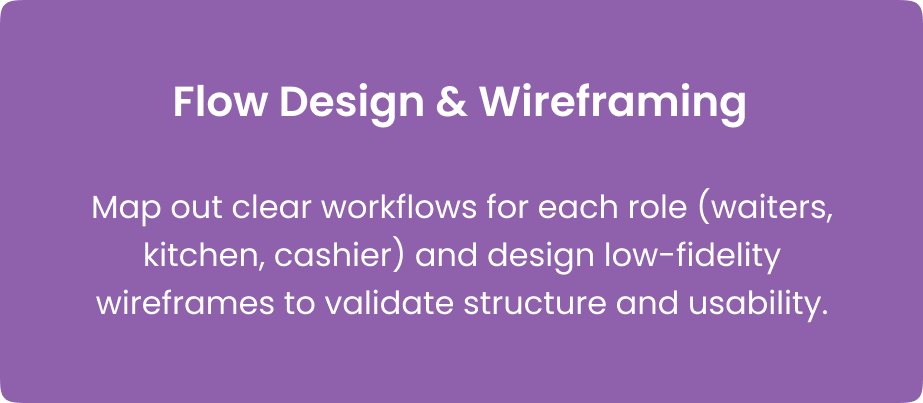
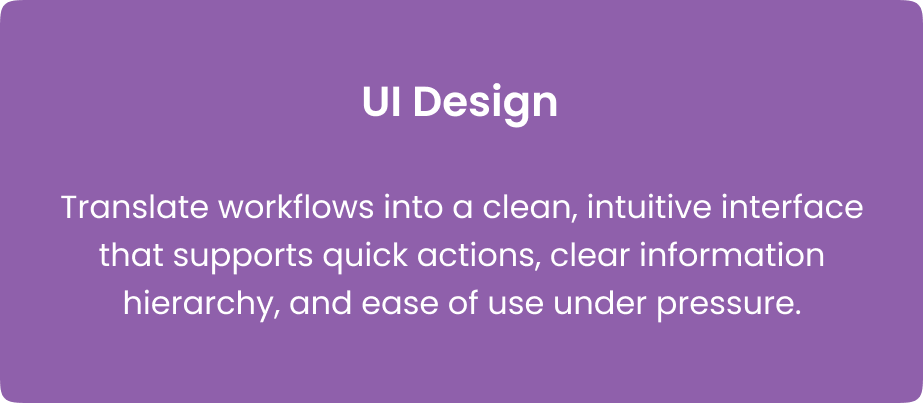
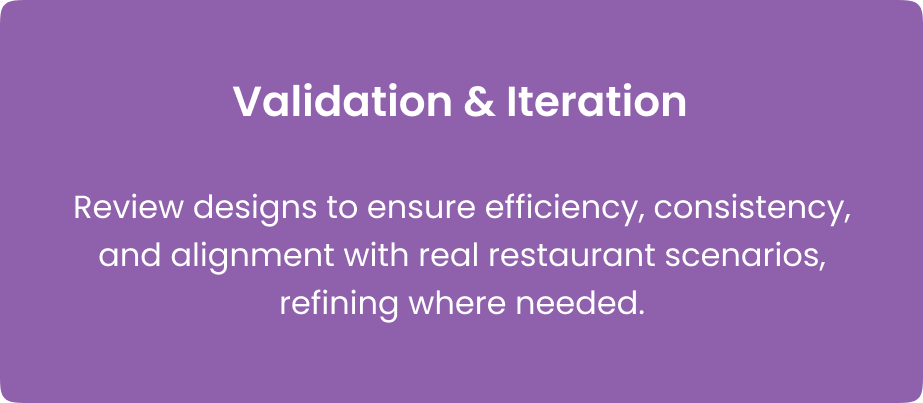
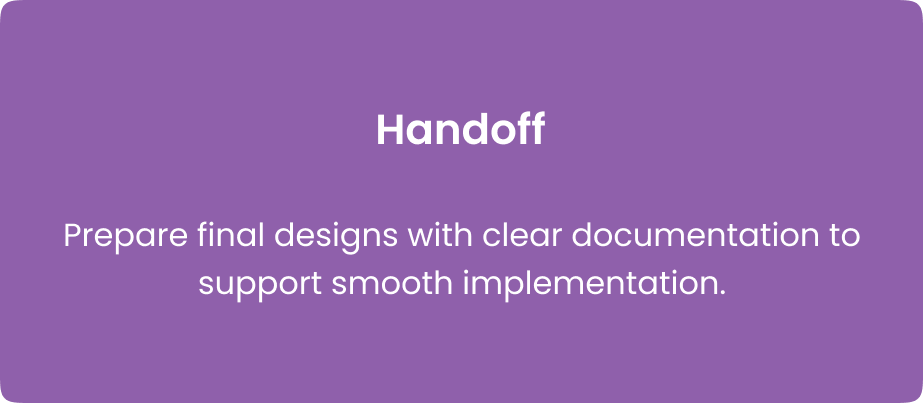
Mapping the operational flow across order taking, kitchen execution, and payment to find where friction collected and design simpler paths through it.
Types of Users
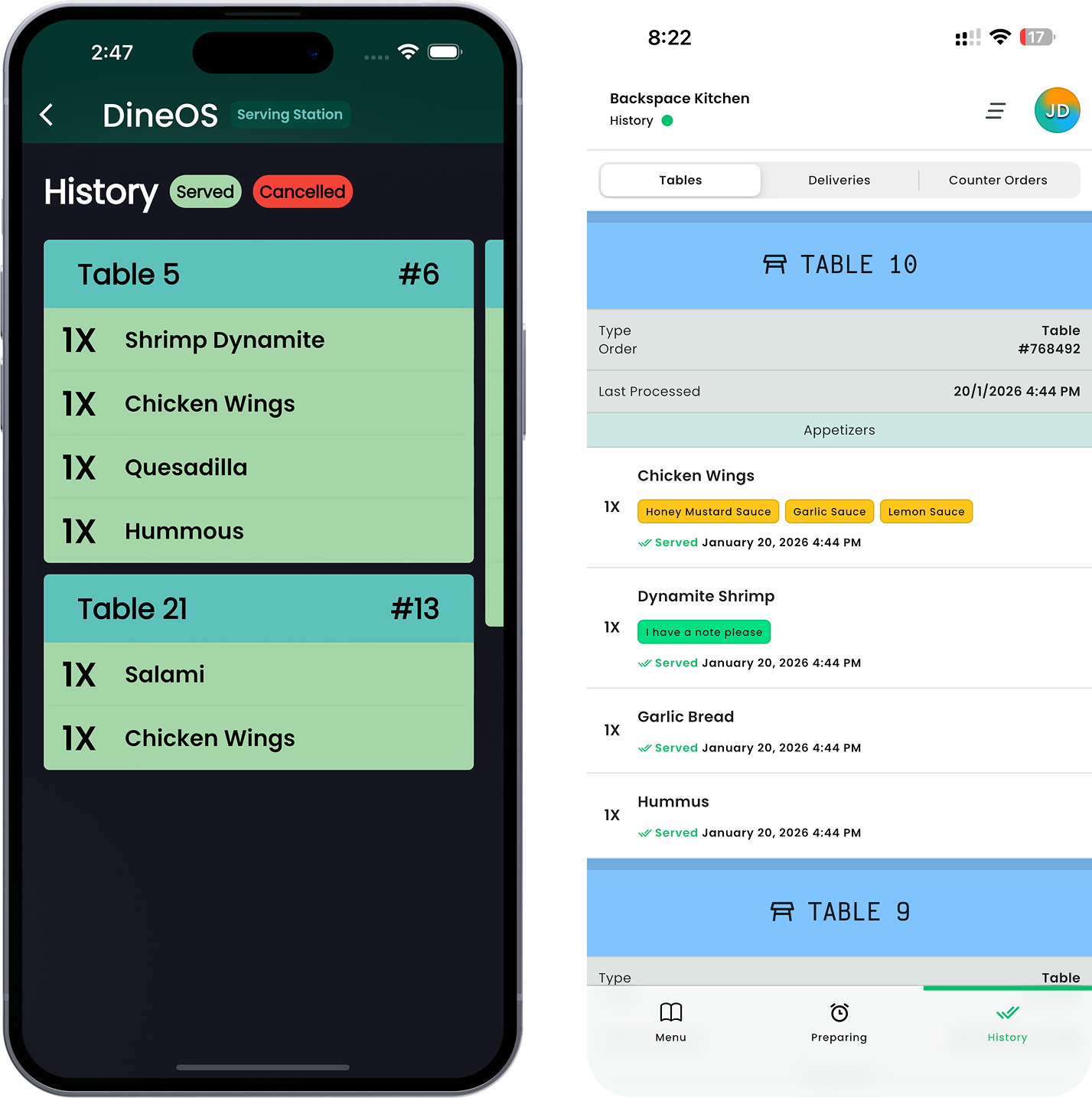
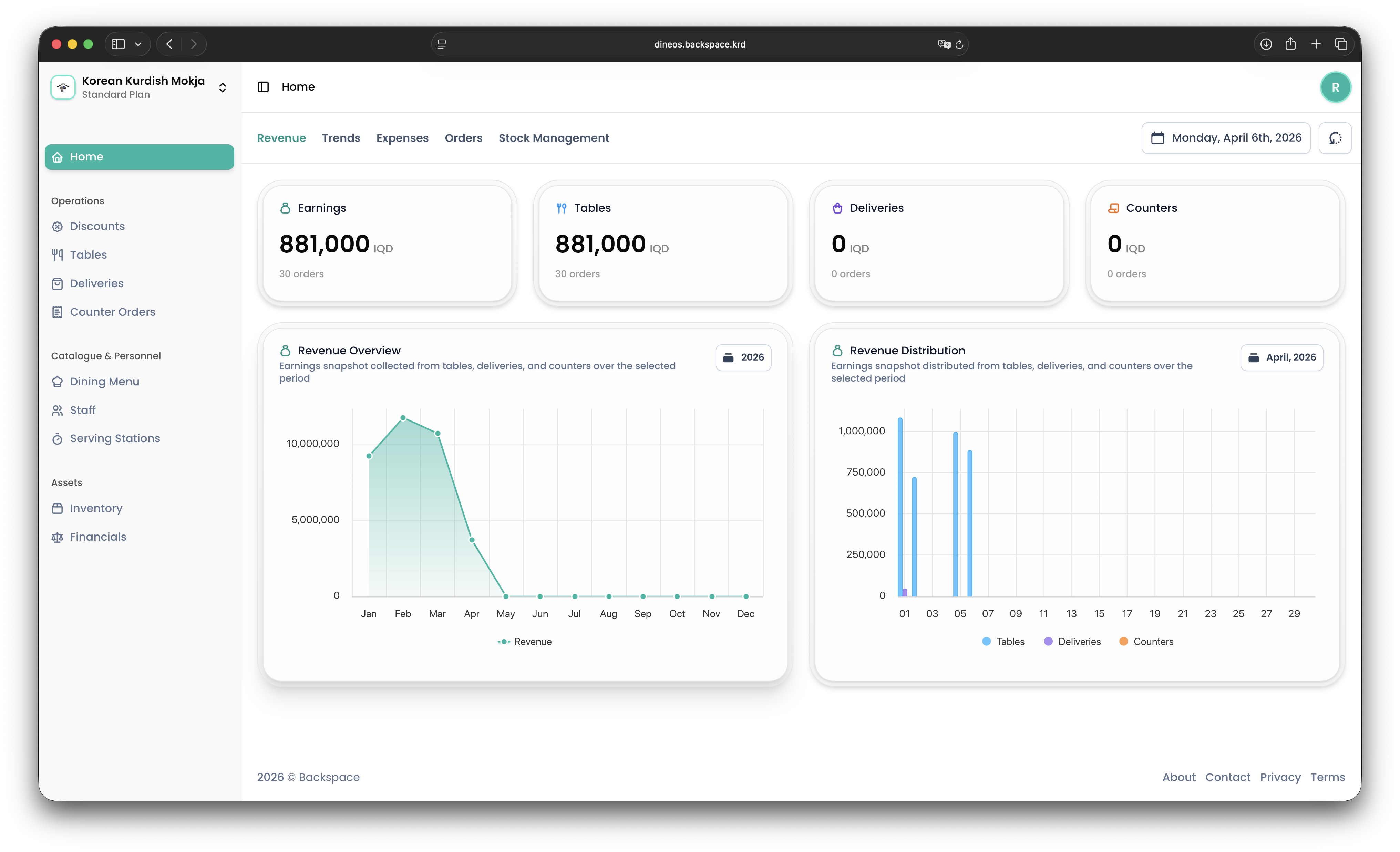
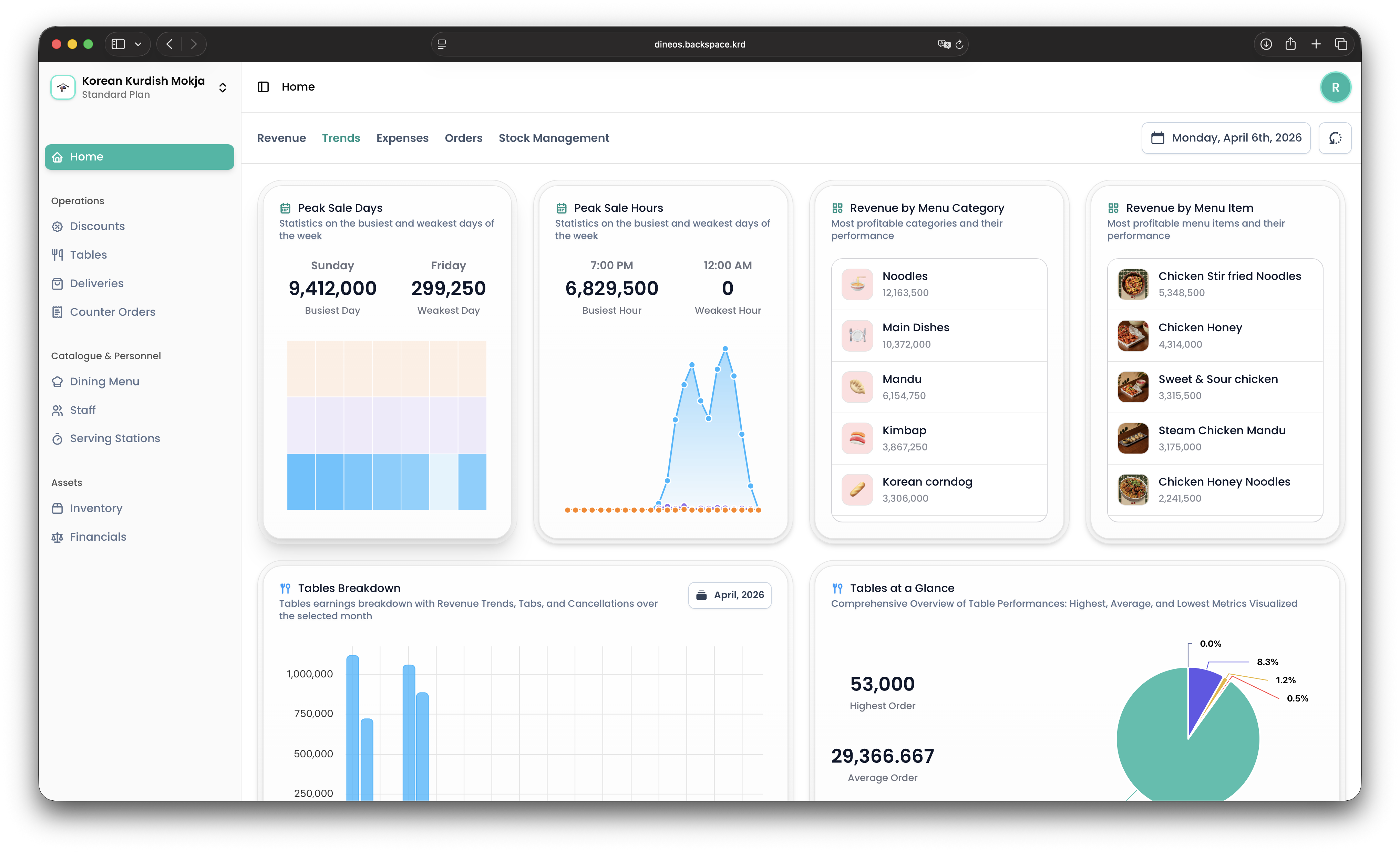
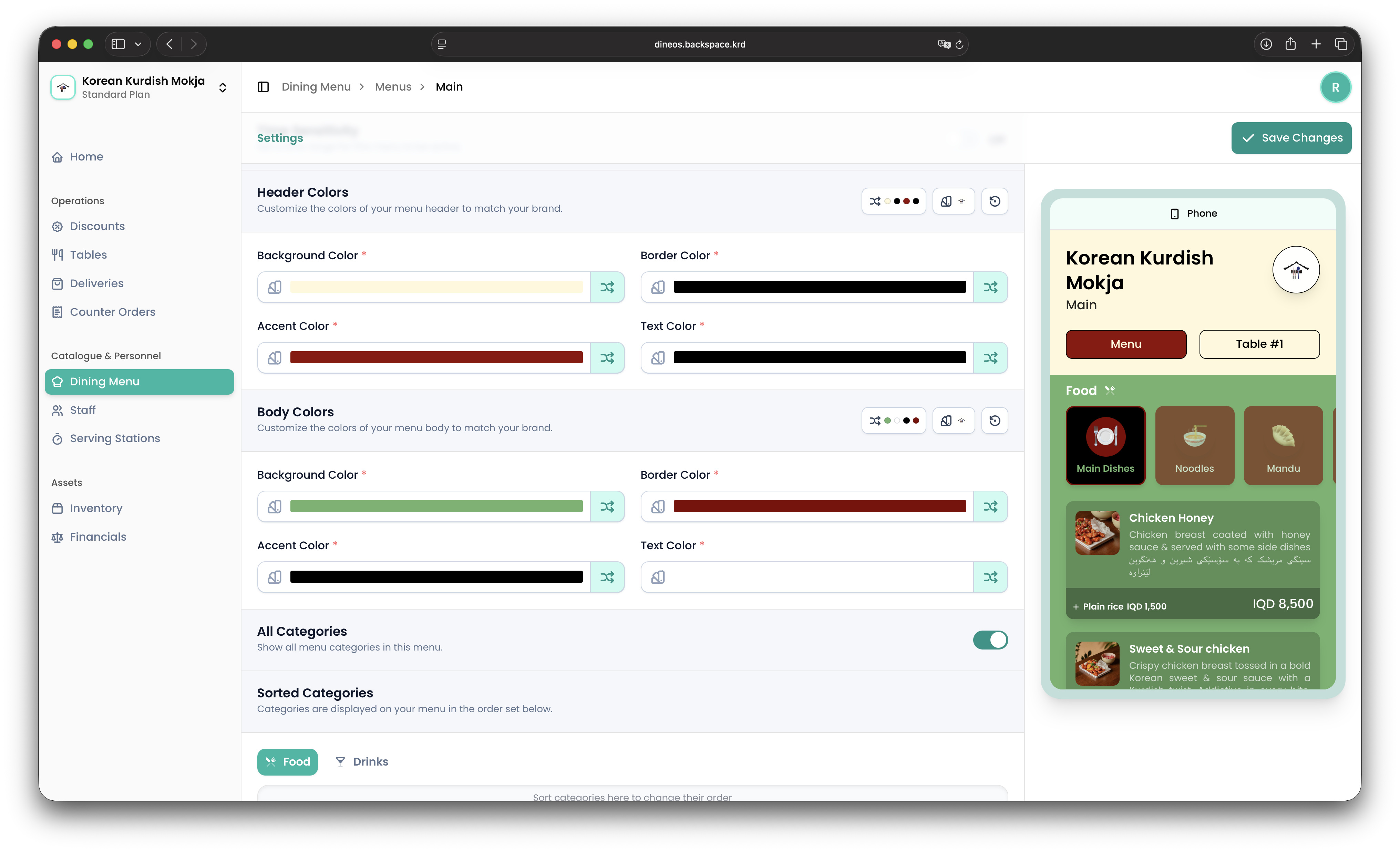
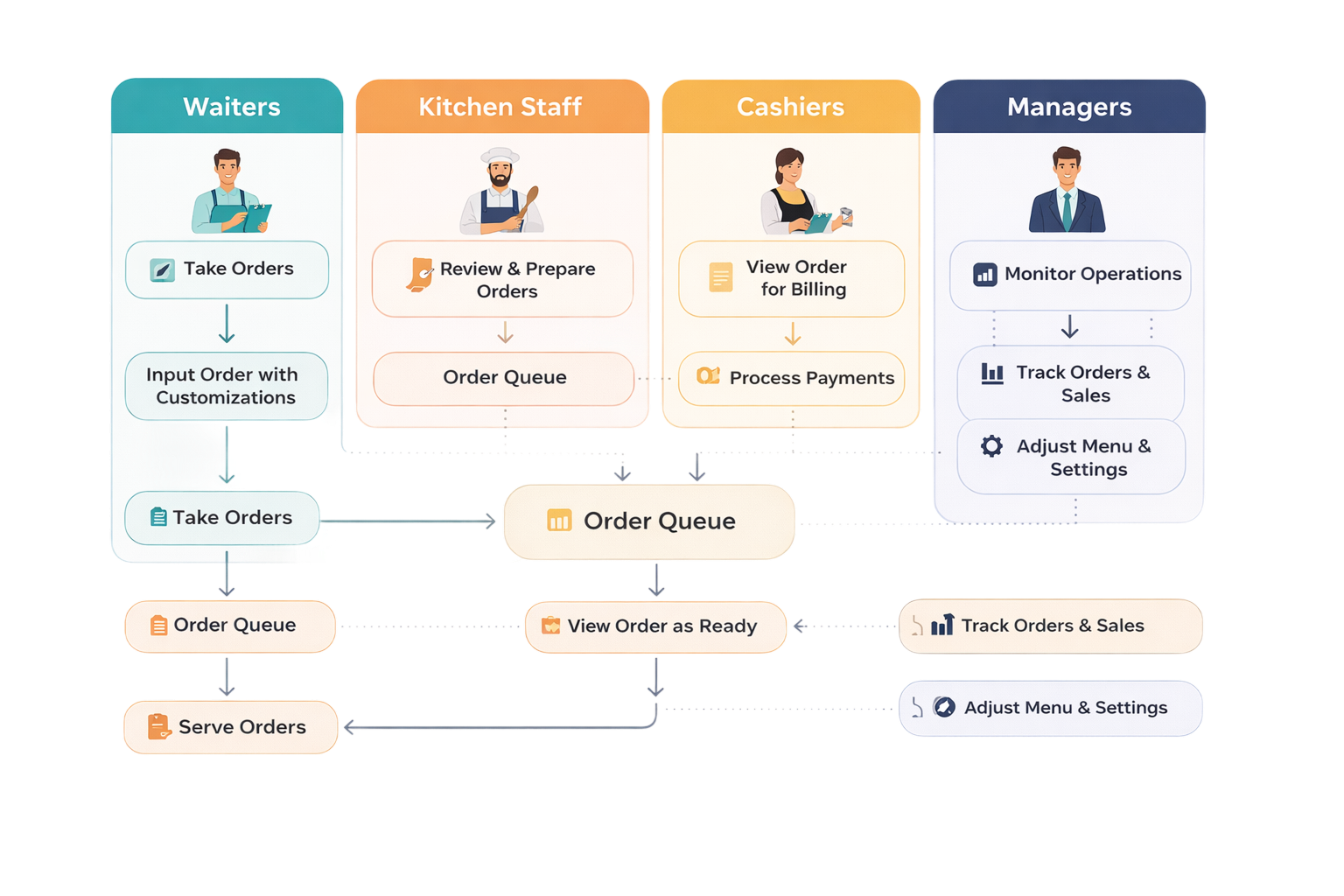
DineOS serves four key user types within a restaurant: waiters, who input orders quickly and accurately; kitchen staff, who receive and prepare orders based on clear, structured information; cashiers, who handle billing and transactions; and restaurant owners and managers, who oversee operations. Each user interacts with the product in a role-specific way to maintain efficiency and alignment during service.
DineOS Redesign
DineOS evolved through a redesign driven by real usage in live restaurant environments. As the system was adopted, it became clear where friction existed, particularly in speed, clarity, and ease of use for staff under pressure. The redesign focused on simplifying interactions, reducing unnecessary complexity, and refining the overall experience to better match how restaurants actually operate day to day.